StyleSmuggler: The Magento Zero-Day Being Exploited Right Now
Sansec found an unpatched Magento and Adobe Commerce RCE under active attack since September 4, 2026. Here's how it works, what's affected, and what to check today.
Security firm Sansec disclosed an unpatched Magento and Adobe Commerce zero-day on September 5, 2026, and attackers were already using it. Sansec calls it StyleSmuggler. It gives an unauthenticated attacker remote code execution on the store's own server, and there is no official patch yet.
This is a developing investigation. Sansec is publishing early because stores are being compromised while they write it, and they've said the page will update as they learn more. Treat what follows as the picture as of September 6, 2026, and check Sansec's own page for anything newer.
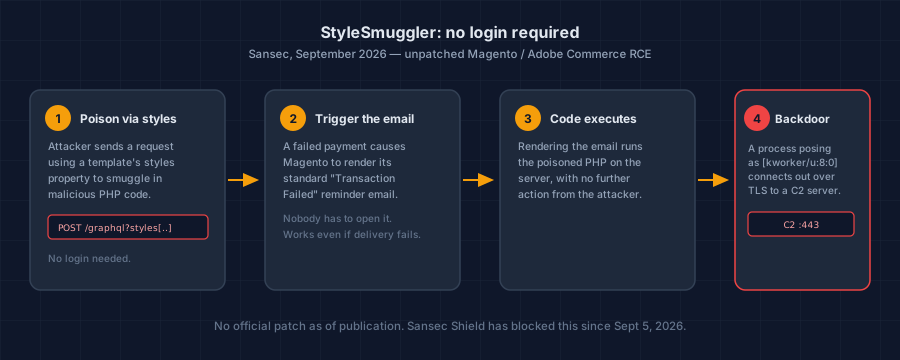
What is StyleSmuggler?
StyleSmuggler is a Magento and Adobe Commerce vulnerability that lets an attacker run their own code on the store's server without logging in first. It works in two stages: plant poisoned PHP code by abusing a template's styles properties, then let Magento execute that code on its own by rendering a routine email.
The email in question is Magento's standard "Payment Transaction Failed Reminder." Nobody has to open it. The malicious code runs the moment Magento generates it, and Sansec notes the attack can succeed even when the email never gets delivered, so a clean inbox doesn't mean a clean store.
Which versions are affected?
Sansec reproduced the complete attack, unauthenticated, from a clean install, on Magento Open Source 2.4.7, 2.4.8, and 2.4.9. The first confirmed real-world victim was running 2.4.6-p15 with the July and August 2026 security patches already applied and a clean security:patch-status report.
That last detail is the one worth sitting with. This isn't a case of an old, unpatched store getting hit. A fully current install was compromised, because the vulnerability itself was unknown until Sansec found it being used.
What happens after StyleSmuggler succeeds?
A successful exploit launches a background process that Sansec identifies as a small Rust program, disguised under a name like [kworker/u:8:0] or fs-cache so it blends into a normal process list. That process connects out to a command-and-control server over what looks like ordinary encrypted web traffic.
Sansec has found no evidence yet that the backdoor has actually been used to do anything beyond wait for instructions. That is not the same as harmless. If the process shows up on your server, Sansec's advice is to rotate your Magento credentials, and we'd add: treat the box as compromised until someone who knows what they're doing has been through it.
This attack targets the server your store runs on, not a script sitting on your checkout page. A payment-page scanner will not see it. If your team's only defense is a header check or a page-content scan, this one gets past it entirely.
How do you check if you were hit?
Sansec published a short set of checks that anyone with server access can run today:
crontab -l | grep -i gvfsd
ls -la ~/.local/share/.gvfsd/ ~/.cache/fontconfig/fc-cache /tmp/.kw_* /tmp/.cache_* /tmp/.gvfsd-* /tmp/.fc-*/fc-cache /tmp/fc-cache 2>/dev/null
ps -eo pid,comm,args | grep -iE 'kworker|fs-cache'
grep -ril 'x_trace_' var/report/
A hit on any of these, particularly a cron entry calling .gvfsd/gvfsd-user or a process named fs-cache that isn't part of your actual stack, is the indicator Sansec is tracking across victims. This is a job for whoever manages your hosting or your Magento agency, not something to guess at yourself if you don't normally touch the server.
What should you do right now?
Three things, in order:
- Run the checks above, or have your developer or agency run them today, not this week.
- If you don't run Sansec Shield, disable GraphQL on your store until Adobe ships a fix, since one attack path Sansec observed runs through a GraphQL request (
POST /graphql?styles[...]=). This is a stopgap that may affect storefront features depending on your setup, not a real fix. - Watch for a spike in failed-payment emails. It's not proof by itself, since real declined cards cause the same email, but an unexplained burst is a reason to look closer, and StyleSmuggler doesn't need the email to actually send in order to work.
Sansec's own tools are the right call here specifically: Sansec Shield for real-time blocking and eComscan for detecting the implant. This is their vulnerability and their detection signatures. We're not going to pretend a general security scan replaces that.
Where CyberShield fits, and where it doesn't
Our free Webpage Security Checker looks at what's running on your checkout page from the outside. It will not catch a server-side RCE like this one, and we'd rather tell you that plainly than let a scan result give you false comfort. Server compromise is a different category of problem, and Sansec's tools are built for exactly this one.
Where we do come in: if StyleSmuggler (or the backdoor it drops) ends up touching your store, that's a security incident with PCI implications, not just an IT cleanup. A server-level backdoor sitting anywhere near your checkout raises real questions about your SAQ scope and what you need to tell your acquirer. If you're not sure what a compromise like this means for your PCI standing, a founder-led review is a place to start that conversation, and it's worth reading how a backend compromise can turn into a payment-page skimmer if it goes unnoticed long enough.
This is still an open investigation. Run the checks, patch when Adobe ships something, and don't take "no email" as a clean bill of health.
Technical Overview
Next steps
Subscribe to the Newsletter
PCI compliance guides and ecommerce threat intelligence, straight to your inbox.
No spam, unsubscribe anytime. We handle your address as described in our privacy policy.
Related Articles
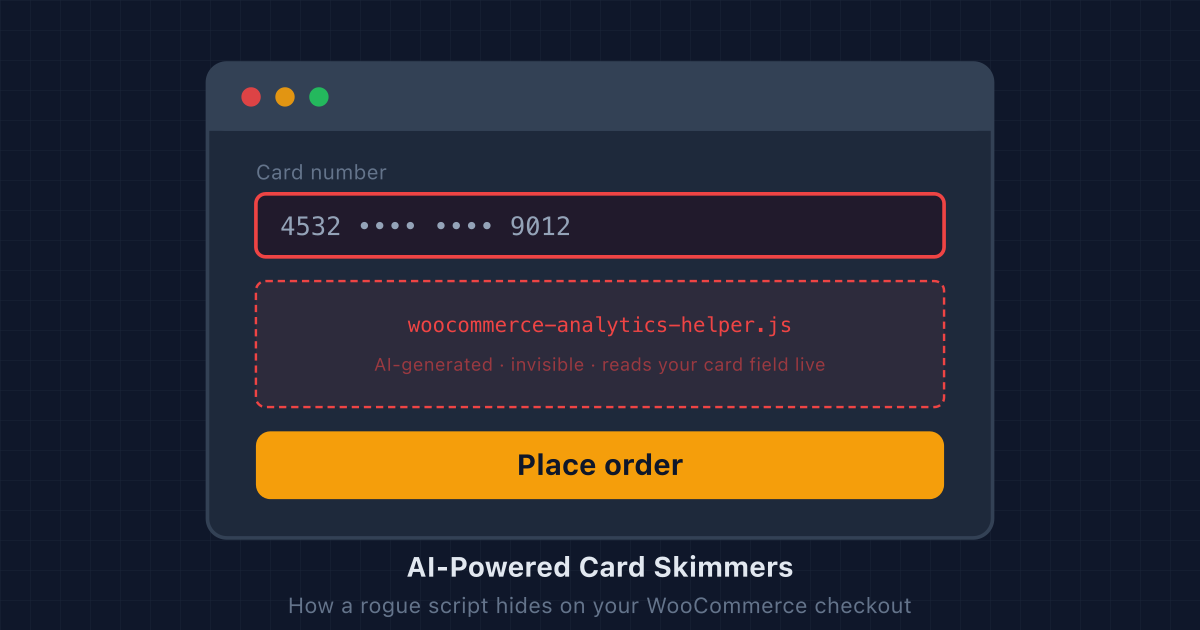
AI-Powered Card Skimmers: How a Rogue Script Hides on a WooCommerce Checkout
Modern card skimmers use AI to mutate their code and impersonate legitimate plugins. Here's how they hide on WooCommerce checkouts, and what store owners can do to find them.
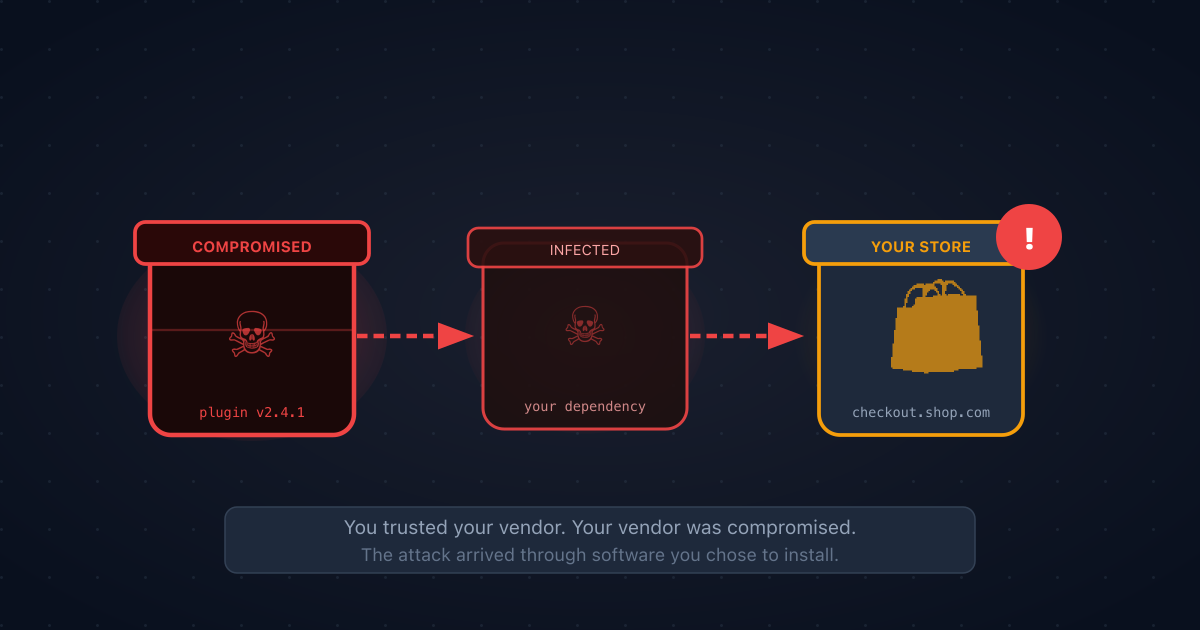
What is a Supply Chain Attack? When the Software You Trust Becomes the Threat
A supply chain attack compromises software or services that you depend on, so attackers reach you through a vendor you already trust. Here's how it works, why it's behind many of the biggest breaches, and what ecommerce merchants can do about it.
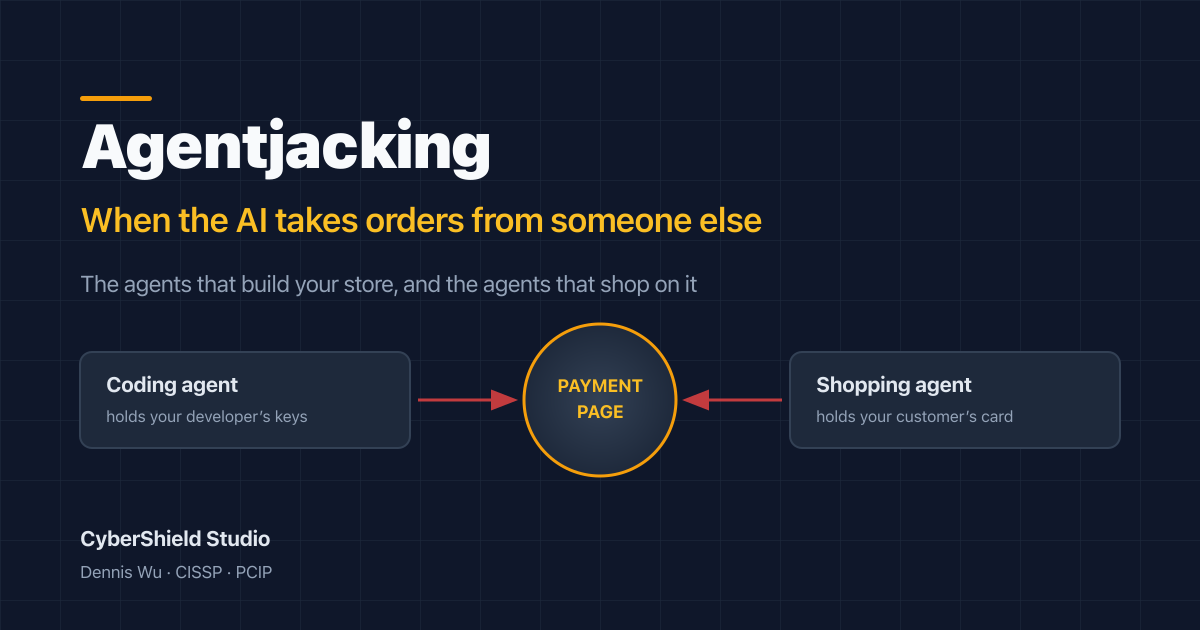
What Is Agentjacking? The AI Attack That Reaches Your Store From Two Sides
Agentjacking hijacks AI agents through data they already trust. Here's the June 2026 research, why it reaches your checkout from two directions, and what to do.